Test eCommerce Products Before Launching
Practical validation steps before scaling a product catalog — from ordering samples to low-budget ad testing.
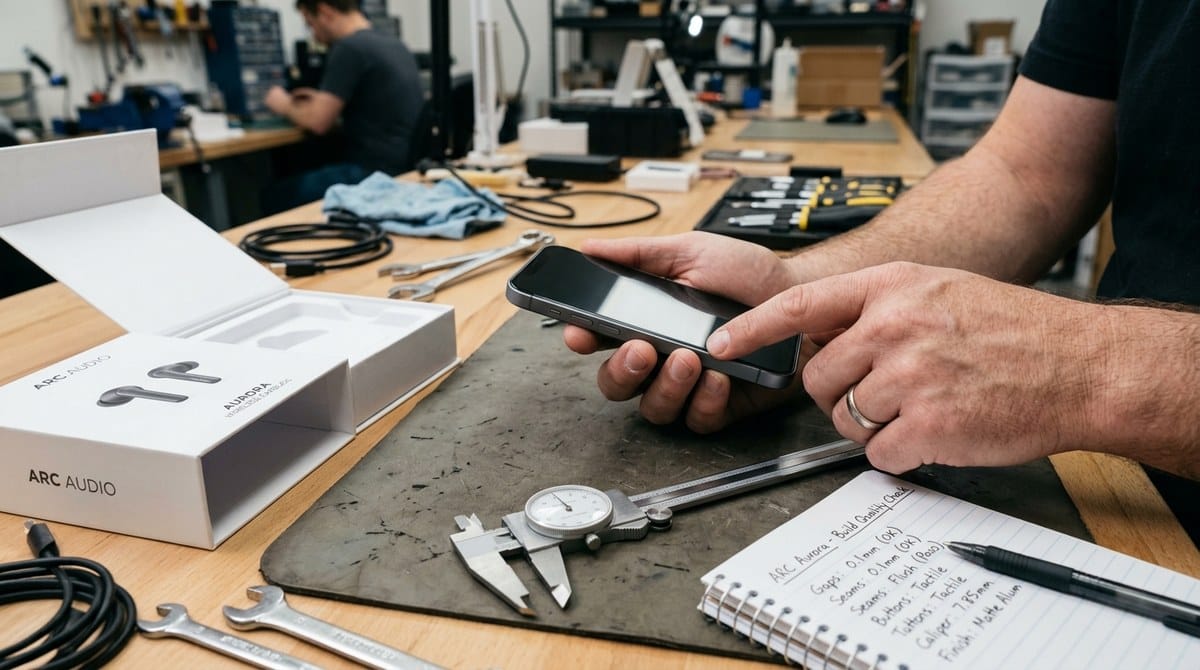
A theoretical calculation and a product you hold in your hand often say different things. Before you order a product in bulk, checking a single sample will save your budget — even when the niche has been chosen and the margin is positive.
Why you should rely on research and not on intuition alone
Intuition matters — often it is intuition that tells you which product is worth checking. But intuition is a starting point, not a final decision. The aim of research is to check your intuition against real signals — whether the market sees what you see. The two together, intuition plus verification, are far more reliable than either one alone.
Why you should not start with mass sales
If you start straight away with a large amount of advertising and stock, a single mistake (poor quality, the wrong size, the wrong expectation on the customer's side) will cost you a great deal — both financially and in reputation. A small test gives you the chance to find the mistake cheaply and fix it before you scale.
How much time and money you should set aside for testing
The testing budget should be defined in advance — for example, a decision that you will spend at most a certain amount of money and a certain amount of time on one product before you draw a conclusion. This protects you from staying on one idea "forever" in the hope that it will work out with just a little more trying. If the budget you set in advance has run out and the result is still weak, that is already an answer in itself.
Step 1: order a sample for yourself
Before you offer a product to a customer, order it for yourself or for someone close to you whom you trust. Check whether the quality matches the photos, whether the packaging stays undamaged on the journey, and whether the real delivery time matches what the supplier promised. This one step brings many problems to light in advance — the kind you would never have seen on the product page.
Step 2: check real demand with a small budget
Before you spend your full advertising budget, run a small, clearly limited test — a small ad shown to a narrow audience, or an organic post on a social network. Are people interested? Do they ask questions? Do they click the link? These signals tell you far more than guessing does.
Step 3: compare several candidate products at the same time
At the testing stage, instead of a single product, it is better to compare 2-3 candidates in parallel — with the same small budget, over the same period. This gives you a real comparison, not an isolated assessment of one product, which may also depend on random factors (e.g. a trend on one particular day).
Step 4: verify the supplier's reliability
Testing concerns not only the product but the supplier as well. Pay attention to whether they answer questions on time, whether they keep the deadlines they promised, and what they offer in the case of damaged or defective goods. The supplier directory on dropship.ge contains only publicly verifiable entries — it is a good starting point, but your own experience is necessary too.
Step 5: use the full product research checklist
Product research involves many small details that are easy to forget in a moment of enthusiasm. The full product research checklist on dropship.ge helps you make sure you do not miss a single key point — from demand to return terms.
Why uploading many products at once is not recommended
At the testing stage the temptation is strong: upload dozens of products and see which one "takes off". In reality this makes the analysis harder: you cannot know which product's result depends on which factor if everything changes at the same time. A small, controlled test — one or a few products at a time — gives you a much cleaner picture of what works and why.
Step 6: write down results instead of impressions
At the end of testing it is easy to rely on a general feeling — "it went well" or "it went badly". For the next test, however, concrete numbers are far more useful: how many people saw it, how many clicked, how many bought, and what each step cost. A simple spreadsheet or a file of notes is enough — the main thing is that at the next test you know what you are comparing.
How long testing should last
A very short test (one or two days) often misleads — chance can create the wrong impression. A very long test, on the other hand, spends the budget on putting off a decision. A practical guideline is one or two weeks with enough volume — not just a number of days. If enough people have seen your offer during that time and the result is still weak, that is a sufficient signal for making a decision.
What a "successful test" means
A successful test does not mean instant large sales — it means a clear signal: people were interested, the product is of good quality, and the numbers (margin, delivery reliability) are positive. If all three of these conditions are met, you are ready to scale. If even one of them is not met, it is better to move on to the next candidate in good time than to stubbornly carry on with a failed idea.
Why relying on a supplier's rating is not enough
On many platforms suppliers have a rating and reviews — this is a useful starting signal, but never enough on its own. A rating often shows an average across many different products and markets, not specifically your category and delivery to Georgia. What a "good supplier" really means for you shows only through your own testing — by ordering your own sample and through your own experience of communicating with them.
What to do when two candidates are equally successful
Sometimes a test brings two or more candidates to equal results — this is a good problem, not a bad one. In this case the additional deciding factor is not the product itself but operational simplicity: which supplier is more reliable, which logistics are easier to manage, which one gives you more control over quality. If they are equal on both counts, you can keep both in parallel for a time and let later data decide.
What to do if the test showed no result
Sometimes a test shows "nothing" — neither a good signal nor a bad one; it simply goes quiet. This often means that the test itself was flawed: an audience that was too small, a vague offer, or the wrong channel. Before you decide the product is "irrelevant", check the mechanics of the test itself — sometimes the problem is not in the product but in how you offered it.
Summary: the five main steps of the process
Ordering a sample → a small demand test → comparing several candidates → checking the supplier's reliability → verifying against the full checklist. This is not a process you go through once — every new product repeats the same five steps, faster each time, the more experience you have.
How a sample differs from a bulk order
The quality of a single sample may differ slightly from that of a large batch — with a large order, a different production team or warehouse sometimes gets involved in the process. That is why one good sample is a reliable starting signal, but the quality of the first small bulk order is also worth checking before you move to full scale.
Next step: testing the store in practice
Test results are best worked through in a real store, not on separate landing pages — because a real store gives you the full picture (from traffic to order). On Sellit, opening a store and uploading products is done in a matter of hours, so the testing cycle is measured in days, not months.